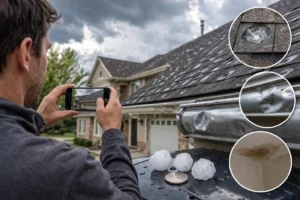

Hail storms don’t just dent shingles they expose a major flaw in how insurance claims are handled. The initial estimate you receive often looks complete, even professional. But here’s the truth: Hail Damage Claim Supplements: What Carriers Miss in Their Scope is where the real story begins, and where your Xactimate expertise (or lack of it) determines whether you’re fully paid or underpaid.
I’ve seen homeowners assume the first estimate is final. It’s not. Not even close. Especially in Houston, where hail events can be intense and widespread, initial scopes are frequently missing critical components. That missing scope? That’s your money. Let’s break this down properly.
Understanding Hail Damage Claims (The Basics That Matter)
A hail damage claim starts with a simple chain reaction. A storm hits. Damage occurs. You file a claim. An adjuster inspects your property and creates an estimate. Simple on paper. Complicated in reality.
The Players You’re Dealing With
- You (Homeowner) – The one who suffers the loss
- Insurance Adjuster – Represents the carrier’s interests
- Contractor – Executes the repairs
- Public Adjuster – Advocates for you
Each one plays a role. But only one is financially incentivized to limit costs.
Dealing with this right now? Houston Public Adjusters will review your claim for free and tell you plainly whether it was paid fairly.
Why Hail Damage Gets Underestimated
This is where problems begin:
- Surface inspections – Damage below shingles often goes unnoticed
- Volume overload – Adjusters handle dozens of claims daily after storms
- Limited time per property – Inspections are often rushed
And just like that, items are missed. Not intentionally every time but consistently.
What Is a Claim Supplement?
A supplement is your second chance to get it right. It’s a formal request to revise the original insurance estimate by including:
- Missed items
- Underestimated costs
- Code-required upgrades
- Hidden damage discovered later
Why Supplements Matter Financially

Let’s look at what this means in real terms:
| Category | Initial Scope | After Supplement |
|---|---|---|
| Roofing | $13,500 | $21,000 |
| Exterior | $9,000 | $16,200 |
| Interior | $4,800 | $10,400 |
That’s not a small difference. That’s the difference between patchwork repairs and doing the job correctly. And that’s exactly why Hail Damage Claim Supplements: What Carriers Miss in Their Scope should never be ignored.
Why Carrier Scopes Are Often Incomplete
There’s a pattern here. Once you understand it, you can anticipate it.
Speed Over Precision
After a hailstorm, carriers deploy catastrophe teams. Their goal? Process claims fast. Speed increases. Detail decreases.
Limited Property Access
- Steep roofs
- Wet surfaces
- Safety concerns
If the adjuster can’t fully access an area, it may not be fully scoped.
Missing Trade Coordination
Roofing, gutters, interior repairs they’re interconnected. Missing one component affects the entire estimate.
Built-In Cost Controls
Insurance companies manage risk. Lower initial estimates help them control payouts. Supplements? Those require justification and effort.
Common Items Insurance Carriers Miss in Hail Claims
Let’s get specific. This is where Hail Damage Claim Supplements: What Carriers Miss in Their Scope becomes actionable.
Roofing Components Often Missed
- Starter strips
- Ridge caps
- Drip edge
- Flashing (step and counter)
- Ice & water shield
Exterior Items Frequently Overlooked
- Gutters and downspouts
- Fascia boards
- Soffits
- Siding impacts
- Window screens
Interior Damage That Shows Later
- Water intrusion
- Ceiling staining
- Wet insulation
- Mold risk areas
Code Upgrades (A Big One)
Building codes change. Especially in areas like Houston, where storm resilience is a priority. If your home requires upgrades to meet current code, those costs should be included. But often… they aren’t.
The Role of Xactimate in Claim Supplements
Now we get into the core of this entire process.
What Is Xactimate?
Xactimate is the estimating software used by insurance companies to price claims. It’s standardized. Widely accepted. And powerful. But only if used correctly.
Why Xactimate Is So Important
- Provides region-specific pricing
- Breaks work into detailed line items
- Aligns with insurance carrier systems
The Difference Expertise Makes
Here’s where things separate:
| Basic User | Expert User |
|---|---|
| Uses default line items | Customizes detailed scopes |
| Misses components | Identifies hidden costs |
| Accepts pricing | Adjusts for real-world conditions |
That’s why mastering Hail Damage Claim Supplements: What Carriers Miss in Their Scope requires more than just opening the software.
Breaking Down a Proper Xactimate Supplement
A strong supplement isn’t guesswork. It’s precise.
Line Item Selection
Each repair component must be coded correctly. Incorrect codes get rejected or reduced.
Measurement Accuracy
- Roof square calculations
- Waste factors
- Pitch adjustments
Even small errors here can cost thousands.
Labor Complexity
Not all jobs are equal. Steep roofs. Multi-story homes. Tight access points. These all affect labor costs.
Supporting Documentation
You need proof. Always.
- Photos
- Measurements
- Diagrams
- Contractor notes
Without documentation, supplements stall.
The Supplement Process Step-by-Step
Here’s how professionals handle it.
Step 1: Re-Inspection
Step 2: Scope Comparison
Step 3: Xactimate Estimate Creation
Step 4: Submission
Step 5: Negotiation
This structured process ensures nothing is overlooked.
Advanced Strategies That Maximize Supplements

If you want real results, you need to go beyond the basics.
Layered Documentation Approach
Combine:
- Photos
- Contractor reports
- Manufacturer specifications
Code Compliance Justification
Provide actual code references.
Technical Precision in Explanations
In some cases, explaining material behavior can strengthen your claim. For example, referencing complex scientific concepts like Epistemology may seem unrelated, but it demonstrates a deeper analytical framework something that can indirectly support structured, evidence-based claim arguments.
Common Mistakes Homeowners Make
- Accepting the first estimate
- Hiring inexperienced contractors
- Poor documentation
- Waiting too long
Avoid these, and you’re already ahead.
How Public Adjusters Maximize Claim Supplements
Public adjusters bring:
- Policy expertise
- Xactimate mastery
- Negotiation experience
For homeowners in Houston, this can significantly increase final claim outcomes.
Real-World Example
Initial Claim: $14,200
Final After Supplement: $26,800
That difference? It’s everything.
Tips to Strengthen Your Supplement
- Document early
- Get a second inspection
- Use detailed estimates
- Stay organized
When to File a Supplement
- After initial review
- During repairs
- After hidden damage appears
Final Thoughts
Hail damage claims are rarely complete the first time. That’s reality. Hail Damage Claim Supplements: What Carriers Miss in Their Scope is the process that corrects those gaps. And with strong Xactimate expertise, you’re not guessing you’re proving. If you’re dealing with hail damage in Houston, don’t settle for the first number. Push further. Document better. Supplement smarter. Because what’s missed… can be recovered.
FAQs
What is a hail damage claim supplement?A hail damage claim supplement is a request to update your insurance estimate by adding missed items, correcting costs, or including hidden damage discovered after the initial inspection.
Why do insurance carriers miss items in their scope?Carriers often work under time pressure and rely on limited inspections, which can lead to overlooked components and incomplete estimates.
Can I file a supplement after I receive my insurance payout?Yes, supplements can typically be filed even after payment if additional damage or missing items are properly documented.
Do I need a public adjuster to file a supplement?No, but a public adjuster can significantly improve your chances of maximizing the claim by identifying missed items and handling negotiations.
What is Xactimate and why is it important?Xactimate is the industry-standard estimating software used to create detailed, line-item repair estimates accepted by insurance companies.
Are building code upgrades covered in a supplement?In many cases, yes if your policy includes code coverage, required upgrades can be added through a properly documented supplement.
Can a supplement increase my claim payout?Yes, supplements often increase payouts by including overlooked repairs and adjusting inaccurate pricing.
What documentation is needed for a strong supplement?You’ll need clear photos, measurements, contractor estimates, and any relevant reports to support your request.
Is there a deadline to file a hail damage supplement?Deadlines vary by policy and state, but it’s best to file as soon as possible to avoid complications or denial.
This article is general information from a licensed Texas public adjuster, not legal advice. Every policy and loss is different — ask us to review yours.