
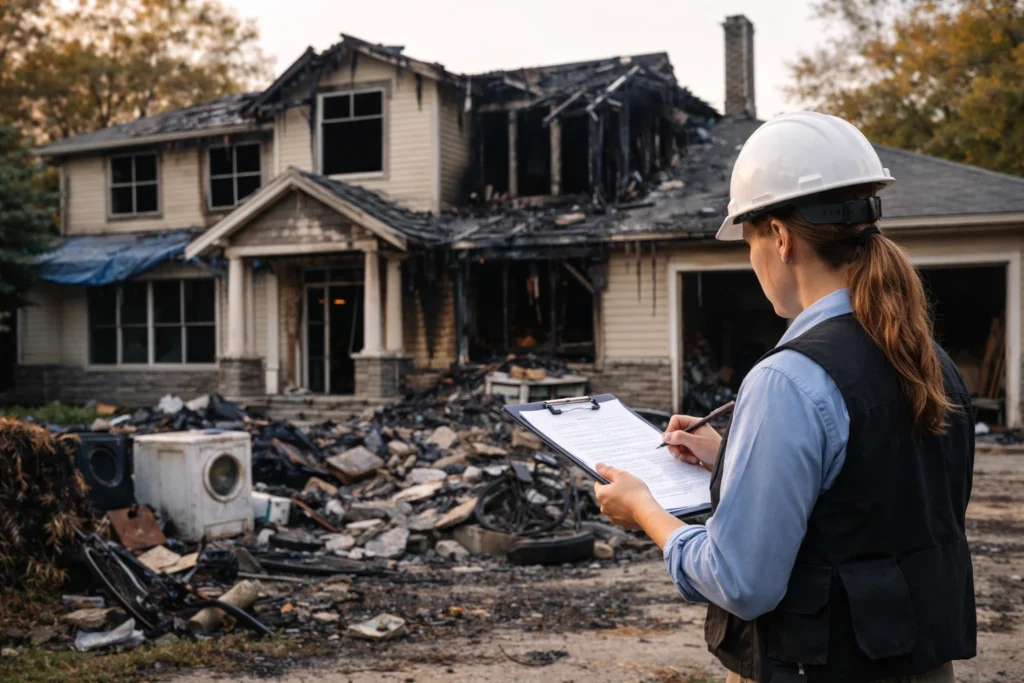
A house fire changes everything in a matter of minutes. One moment you’re living your routine. The next, you’re dealing with smoke damage, structural issues, and a flood of decisions that can impact your financial future. This is exactly where a fire insurance adjuster becomes criticaland not just helpful, but strategic.
I’ve seen homeowners try to navigate fire claims alone. Some do okay. Many don’t. The difference usually comes down to one thing: understanding how the process actually works and who is truly on your side. Let’s break it down.
What Is a Fire Insurance Adjuster?
A fire insurance adjuster is a professional responsible for evaluating fire damage, interpreting insurance coverage, and determining how much should be paid out on a claim. Simple definition. Complex reality.
Their job isn’t just to “look at damage.” They assess structural loss, smoke contamination, water damage from firefighting efforts, and personal property loss. Then they translate all of that into numbers numbers that directly impact your payout. But here’s the part most people miss: not all adjusters work for you.
Types of Fire Insurance Adjusters
Understanding who the adjuster works for is everything. It shapes how your claim is handled.
Breakdown of Adjuster Types
| Type of Adjuster | Who They Work For | Main Objective | Impact on Your Claim |
| Insurance Company Adjuster | Insurance carrier | Minimize payout | May undervalue damages |
| Independent Adjuster | Contracted by insurer | Process claims efficiently | Neutral but still insurer-aligned |
| Public Fire Insurance Adjuster | You (policyholder) | Maximize your settlement | Advocates for your interests |
A public fire insurance adjuster is the only one legally obligated to represent you. That difference alone can shift your outcome significantly.
What Does a Fire Insurance Adjuster Actually Do?
This is where things get real. A fire insurance adjuster isn’t just walking through your home with a clipboard.
They:
- Inspect structural damage (walls, roof, foundation)
- Identify hidden smoke and soot damage
- Evaluate water damage caused by firefighting
- Create a detailed inventory of damaged items
- Estimate repair or rebuild costs
- Interpret your insurance policy line-by-line
- Negotiate with the insurance company
It’s part technical, part financial, part negotiation.
And every step matters.
Why Fire Claims Are More Complicated Than You Think
Fire claims are rarely straightforward. In fact, they’re among the most complex insurance claims you can file.
Here’s why:
- Smoke travels everywhere
Even rooms untouched by flames can suffer serious damage. - Water damage adds another layer
Firefighters save your home but water can create mold and structural issues. - Structural integrity isn’t always visible
Heat can weaken beams, framing, and support systems without obvious signs. - Code upgrades can increase costs
Houston building codes may require upgrades during repairs. - Personal property valuation is tricky
What’s the real value of your belongings? Replacement cost vs actual cash value matters.
Fire damage isn’t always obvious at first glance. Beyond what you can see, there are deeper structural and chemical changes happening within materials sometimes at a microscopic level. In fact, the way heat alters surfaces can resemble processes studied in advanced fields like photolithography, where precision and surface transformation play a critical role. While the contexts are completely different, the takeaway is the same: surface-level observations rarely tell the full story. This is where a skilled fire insurance adjuster earns their value. They know what to look for and what others might miss.
When Should You Hire a Fire Insurance Adjuster?
Short answer? Sooner than you think.
Here are the moments when bringing in a fire insurance adjuster makes the most impact:
- Immediately after a significant fire loss
- When your claim involves major structural damage
- If your insurance company delays communication
- When you receive a low initial settlement
- If your claim is partially denied
- When the process feels overwhelming (it often does)
Timing matters. Early involvement means better documentation, stronger positioning, and fewer missed opportunities.
Signs You Need a Public Fire Insurance Adjuster
Sometimes the need isn’t obvious at first. But watch for these signals:
- Your insurance estimate feels too low
- Important damages are missing from reports
- You’re struggling to understand policy language
- Communication from the insurer is inconsistent
- You feel pressured to settle quickly
If any of these sound familiar, it’s time to consider professional representation.
Fire Insurance Adjuster vs Insurance Company: Key Differences
Let’s make this crystal clear.
| Factor | Insurance Adjuster | Public Fire Insurance Adjuster |
| Loyalty | Insurance company | You |
| Goal | Control costs | Maximize payout |
| Negotiation | Limited flexibility | Aggressive advocacy |
| Transparency | Varies | Typically higher |
This isn’t about good vs bad. It’s about alignment. And alignment affects outcomes.
The Fire Insurance Claim Process (Step-by-Step)
Understanding the process gives you leverage. Here’s how it typically unfolds:
1. Emergency Response
Secure the property. Prevent further damage.
2. File the Claim
Notify your insurance company immediately.
3. Initial Inspection
An adjuster assesses visible damage.
4. Documentation
Photos, videos, and inventory lists are created.
5. Damage Estimation
Repair and replacement costs are calculated.
6. Negotiation
Back-and-forth begins. This is where most value is gained or lost.
7. Settlement
Final payout is issued.
A fire insurance adjuster plays a role in nearly every step, especially in documentation and negotiation.
How a Fire Insurance Adjuster Maximizes Your Settlement
This is where things get interesting. A strong fire insurance adjuster doesn’t just “review” your claim. They actively build it.
Here’s how they increase your payout:
- Detailed documentation
Every item, every surface, every impact is accounted for. - Identifying overlooked damage
Smoke damage alone can be underestimated. - Policy interpretation
They understand how to apply coverage in your favor. - Expert collaboration
Contractors, engineers, and restoration specialists support your claim. - Strategic negotiation
They push back professionally and effectively.
Small differences in documentation can mean thousands of dollars. Sometimes more.
Common Mistakes Homeowners Make After a Fire
These mistakes happen fast and they cost money.
Avoid them.
- Accepting the first settlement offer
- Failing to document all damage
- Discarding damaged items too early
- Not understanding policy coverage
- Trying to manage everything alone
The emotional stress after a fire makes these mistakes more likely. That’s why having a fire insurance adjuster can provide clarity when you need it most.
How to Choose the Right Fire Insurance Adjuster in Houston
Not all adjusters are equal. Choose carefully.
What to Look For
- Licensed in Texas
- Proven experience with fire claims
- Strong understanding of Houston construction costs
- Clear contingency fee structure
- Positive reviews and case results
Questions to Ask
- How many fire claims have you handled?
- What’s your typical settlement increase?
- How do you document damage?
- What’s your communication process?
Red Flags
- Upfront fees
- Unrealistic promises
- Lack of contract transparency
- Poor communication
The right fire insurance adjuster will be transparent, experienced, and proactive.
How Much Does a Fire Insurance Adjuster Cost?
Most public adjusters work on a contingency fee basis.
Typical range: 5% to 15% of the settlement
That means:
- No upfront cost
- They only get paid if you do
Is it worth it?
In many cases, yes especially when they significantly increase your payout. It’s about net outcome, not just percentage.
Houston Fire Risks and Why Local Expertise Matters
Houston isn’t just any city. It has its own risk profile.
- Older electrical systems in certain neighborhoods
- Storm-related fire risks
- High humidity affecting smoke and mold damage
- Unique building code requirements
A local fire insurance adjuster understands these nuances. That insight can influence both documentation and negotiation.
Real Scenario: Fire Claim Before vs After Hiring an Adjuster
Let’s keep it simple.
Before:
- Insurance offer: $85,000
- Limited documentation
- Missing smoke damage in multiple rooms
After hiring a fire insurance adjuster:
- Revised claim: $140,000
- Expanded damage scope
- Additional code upgrade coverage included
That’s not uncommon.
The gap often comes down to expertise and persistence.
Final Thoughts: Is a Fire Insurance Adjuster Worth It?
A fire claim is one of the most stressful financial events a homeowner can face. It’s not just about repairs it’s about recovery. A skilled fire insurance adjuster brings structure to chaos. They turn confusion into strategy. And most importantly, they help ensure you don’t leave money on the table.
If your claim is small and straightforward, you might manage it alone. But if it’s complex, high-value, or emotionally overwhelming? Getting professional help isn’t just smart it’s strategic.
FAQs
A fire insurance adjuster evaluates fire damage, estimates repair costs, and helps determine how much the insurance company should pay on your claim.
If your damage is significant or your claim feels overwhelming, hiring a fire insurance adjuster can help ensure nothing is missed and your payout is maximized.
An insurance adjuster works for the insurer, while a public fire insurance adjuster represents you and advocates for a higher settlement.
Most public fire insurance adjusters charge a contingency fee, typically between 5% and 15% of your final settlement.
Yes, they often increase payouts by identifying overlooked damage, improving documentation, and negotiating more effectively with insurers.
The earlier you hire one after a fire, the better, as they can guide documentation and prevent costly mistakes from the start.
Claims can include structural damage, smoke and soot damage, water damage from firefighting, and personal property loss.
Yes, but large or complex claims can be difficult to manage alone and may result in a lower settlement if key details are missed.
It varies, but most claims take several weeks to months depending on the severity of damage and how quickly negotiations are resolved.
Look for proper licensing, fire claim experience, transparent fees, and strong reviews or proven results.